 I finished a leadership training a couple of weeks ago and paused to thank the participants before we wrapped up. I thanked them for their engagement and their participation. And, I explained to them that I had lost a friend and team member just two weeks before to a tragic and untimely death. After two days of adrenaline facilitating and actually enjoying it, I was clearly and quickly coming down off the high. Through tears, I thanked them for helping me find joy in my work again during such a terrible time. I explained that getting back in there and doing the work was one thing, but I hadn’t yet figured out how I would find joy in it.
Fast forward to today, about a month later, when I was out for a run in one of my sacred places, Shelby Park. I’ve been running lately without music because I recognize how noisy my head has been since he died. When I run, I just let my head be noisy until it gets tired and finally quiet. I just let it run while I run. I passed a woman going the other direction whose t-shirt said in bold letters: BRING JOY. I instinctively complimented her and after she’d passed thanked her somewhat to myself. That shirt planted a new thought path amidst the other noise in my head. It quickly dawned on me that I needed to reframe where I am and how I have been thinking about it since my friend’s passing. I need to stop looking for joy, trying to find joy, and instead concentrate on bringing it. Looking seems an endless, outward journey. Bringing feels like an empowering, inward prompt. (That’s a helluva t-shirt.) Over the last month, I’ve been looking. During my search, my “good mornings” to my team were practically non-existent for several weeks. They weren’t “good” mornings. They were shitty mornings. And, I’m shitty at faking it. I just needed to get through the day and get some stuff done and put one foot in front of the other. No more. No less. No joy. This last week, I somewhat unwittingly returned to the “good mornings” but still a bit half-heartedly. I’m trying or perhaps I’m just progressing and it’s not really about effort. I don’t know. I know my “good morning” is not insincere, but it’s also not what it used to be. Better, but joy would be a stretch. This is what was running through my noisy mind thanks to that t-shirt. And then, a bicycle approached going the opposite direction and it had two little girls in some sort of contraption on the back with a dad driving. The girls were facing each other, meaning one of them was looking forward in the direction the bike was going and one looking back to where it had been. As I passed, the girl facing forward broke into my noise with an enthusiastic “hello!” And, by the time I was responding in-kind, the other little girl said “goodbye!” It was cute and funny and kind of brilliant. I kept running now pondering these two little girls and slowly realized something important from that interaction: every moment is both a hello and a goodbye. It passes as quickly as it is acknowledged, often more quickly. This is a simple fact of life. It’s fleeting. Now, to connect that with my previous noise on grief and my t-shirt prompt to “Bring Joy”… Not every moment is joyful. Not by any stretch and not just in the midst of tragedy. Life is complex and always will be. Joy is a function of sorrow and sorrow is a function of joy. But, every moment is, in fact, passing just as certainly as it approached. Hello. Goodbye. Another moment is there waiting. We don’t have to look for it. The shirt didn’t say “be joyful” or “be happy”. It said to “bring joy”. So, what’s the difference? Fundamentally, one is about a state of being we often can’t control. The other is a choice of an action that we usually can. Even in the midst of loss, I can find joy in what my friend/colleague and I created together and bring that joy to new work. I can bring the joy of the memory of his laugh as I face an office full of other friends/colleagues who are laughing but aren’t him. I can bring the joy resonating in the echoes of our absurd jokes and his goofy impersonations as I listen to others joyfully bantering among themselves. I can bring those joys to my current work and the opportunity I have to build on what we started. The joy of what we had. This doesn’t mean it is easy, but it means I have agency and not just aspiration. I can bring joy and not just look for it, not merely hope to find it. Image: https://greatruns.com/nashville-shelby-bottoms-greenway/
3 Comments
 Pain is inevitable. Suffering is optional.
This teaching from Buddha changed my life and put me on a healing path after my Dad’s suicide. And, as I was thinking about what to write on this the 18th anniversary of his death, April 27, the day before his 62nd birthday, April 28 – the celebration of his life, I was blindsided by a sudden and devastating death of a young coworker and friend. (That’s his picture of totality above.) What the fuck do you do with this? Why the fuck? How the fuck? So young. What happened? He didn’t seem that sick. It can’t be. It is. It just is. Pain. I am suffering for him, his family, his wife, my other coworkers, myself. And then, there’s this word – totality – that has been agitating my brain ever since the solar eclipse a few weeks back when we were all consumed with the “path of totality” – millions packing up their families and their cars with totality as their destination. What a word! Totality! I couldn’t decide if I feared it, or I was seeking it. Whether it is closed and final and finite or the key to transcendence and the eternal. Totality. What is the lesson to be learned beyond a neat, stellar phenomenon for a couple of minutes? Surely, it’s more than cosmic entertainment, cheap cardboard sunglasses, and a media bonanza! It wasn’t coming to me though. But, that word – totality - wouldn’t leave me alone. And then, Andrew died. His photos of totality still in my texts from him. He had flown home to experience the path of totality with his family. Is death totality? I don’t think so. Or, at least, that’s not what has been bothering me with that word for all these weeks. What is totality in life? In the living? And, while I was running yesterday trying to burn off the overwhelming suffering energy that has had me wrecked since I heard the news of my friend’s death, it suddenly became clear to me again, like it did when Dad died, and I read those words the first time from Buddha. Totality is just the sun and the moon together. Both light and shadow. Source and reflection. Love and loss. Joy and sorrow. Fullness and loneliness. Presence and absence. Life and death. Totality is not a celestial moment that happens once in a generation. It is existence. All of it. In totality. And, in human existence, pain is inevitable. Suffering is optional. Thank you for the light. It will always be part of my darkness.  I’m doing the dishes. I like to listen to music while I do the dishes. Tonight, I needed some Pearl Jam. Alexa hit me with “Yellow Ledbetter” out of the gate. So, I obviously asked her to turn it up! The luxury of hands-free Alexa when your hands are covered with dish suds! I am almost immediately sing-mumbling at the top of my lungs about a porch and a wave and a boxer or a bag. Who knows what the hell that song says, and who really cares! Just sing! And, do it loud! Like I’ve been doing it for 30 years!
My sweet and lovingly spiteful younger daughter in defiance of the volume of both my music and my voice – which could never be mistaken for music – decides she suddenly wants to practice her piano and asks if I will turn the music down. I politely decline. I return to my vociferous sing-mumbling: “Ohhhh….ohhhh….yeah…yeah…can you see them…” She turns and heads to the piano. I turn it up more. Still, I start to hear her piano notes through the grungy wash of Pearl Jam at its most melodic and confusing and wonderful. I can tell she’s playing as loud as she can, pushing my grandmother’s ivory piano keys to their limit. But, she will be heard. She’s playing Taylor Swift. “All Too Well.” Taylor will be heard. Pearl Jam or no Pearl Jam. Oh shit. Alexa follows with “Alive”. I am a teenager. And now, I actually know all the words and all the badass air-guitar riffs. But, I’m down to my last dirty bowl. My time and excuse for extremely loud Pearl Jam on a Thursday night, a school night, are running out like the sudsy water down the drain. Taylor via my daughter via my grandmother’s piano keeps audibly peeking in as I reach 1990’s musical euphoria. “Oh, I, oh, I’m still alive.” I reluctantly stop Alexa at the end of “Alive.” I didn’t want to stop. I could have kept doing dishes and jamming all night. Just as Pearl Jam soothed my angsty, teenage soul, so can they soothe my wrinkly, dishpan hands. But, alas. The dishes were done. Taylor takes over. But, just for a few more bars. With the good-spirited spite of my singing and Pearl Jam diminished, my daughter suddenly decided she had practiced enough. Little shit. I love it. I love her. So grunge. But, in the end, I suppose Taylor wins again. So be it. As Eddie Vedder mumbled: “I don’t know whether I’m the boxer or the bag.” It doesn’t matter. Postscript: I decided to look up the lyrics to “Yellow Ledbetter”. It doesn’t make any more sense than the glorious mumbles I hear clear as day in the music. But, for what it’s worth: Yellow Ledbetter Unsealed on a porch a letter sat Then you said I wanna leave it again Once I saw her on a beach of weathered sand And on the sand I wanna leave it again, yeah On a weekend wanna wish it all away And they called and I said that I want what I said And then I call out again And the reason oughtta leave her calm, I know I said I don't know whether I'm the boxer or the bag Oh yeah, can you see them Out on the porch Yeah but they don't wave I see them 'Round the front way, yeah And I know and I know I don't want to stay Make me cry I see I don't know, there's something else I wanna drum it all away Oh, I said I don't, I don't know whether I'm the boxer or the bag Oh yeah, can you see them Out on the porch Yeah but they don't wave I see them 'Round the front way, yeah And I know and I know I don't want to stay I don't wanna stay I don't wanna stay I don't wanna stay, oh no Yeah Oh, oh Oh, oh Images: https://lifeonacocktailnapkin.com/eddie-vedder-in-the-house/ https://www.pinterest.com/pin/taylor-swift-live-performance-in-st-louis--785174516257828659/  But, don’t tell anybody, or it won’t come true.
I was recently at my 90-year-old aunt’s belated birthday party and as they brought out the cake and candles, my cousin reminded her: don’t forget to make a wish! My aunt is 90. She has dementia. She lost her husband a year ago. She can’t walk freely. She can’t manage all body functions. She sits mostly. And, laughs. Some days sharp as a tack. Others, not so much. And, somehow she is still the same old, crazy, wonderful aunt we have all always been crazy about. What did she wish for? This is the first time I’ve ever really wondered much about someone else’s birthday wish - and then almost immediately feared my wondering. What do you wish for at this stage of life? At this stage of health? At this stage of loneliness? Only the day before, I had my own birthday, so my wish was still fresh in my mind as it’s the same wish for every birthday, coin in a fountain, blown dandelion, or clock striking 11:11. I wish for my girls to be happy in their lives. That’s it. Whatever that means. That’s honestly all I wish for. I’ll just have to trust that my wish can still come true despite sharing it here. And, this week, turning 12, my daughter will be prompted to make her own birthday wish. And, like a thousand others before, I won’t really wonder or care too much about what’s in her heart and her mind and in her wish. She’s a kid. Her birthday wish is not for me. But, there was something about my aunt. Something I’m still not settled with, or I wouldn’t be sitting here writing. What do you wish for when life is in its final chapters? Do you wish to see your spouse again, to be reconnected with the love of your life? Do you wish to see your parents? Do you wish you were healthy enough to get around on your own again? Do you wish you could still drive? Do you wish you could still live alone? In the home you built for and with your family? Do you wish you could talk to the friends and family you’ve lost? Do you wish for more years, more life? Or, are all of those wishes really out of the realm? Unreasonable wishes? Lost causes. So, you wish for something that might actually be possible? Do you wish to be done with this life in hopes of moving on to the next? I think I’m troubled by the question because I fear that if I learned my aunt’s answer, somehow it would provide some prescient insight about life that I may not want to know. It’s like being able to predict the future or read someone’s mind. When you’re a kid, maybe it sounds fun. As an adult, it sounds horrifying. I don't fear death, but perhaps I do fear wishing for it. There’s simply no doubt that I would do anything I could to support and help my aunt realize her wish. She’s earned whatever it is. And yet, what can I do? Almost nothing. And, this may be exactly why she shouldn’t share her wish and exactly why I don’t want or need to know it. I’ll just wonder for myself – if I am lucky enough to live to 90 years old and to have lived the life and loved and lost the people that she has, if my mind is fading, if my body has faded, and yet I still love, and yet I still laugh, and yet I’m still alive, and yet…what will I wish for? Please nobody tell me.  It can be hard transitioning to manager. It totally shifts the mindset and value-creation principles that so many new managers developed, delivered, and were recognized for in being promoted to manager. The shift isn’t just one of roles. In many ways, it can feel like one of identity. The people we promote to manager typically value what they do, and value the impact what they do has had on the company.
When we promote them to manager, we recognize them for what they have done, but we change what they do. We change how they are expected to add value and have impact. And yet, we rarely slow down to help reframe what it means to be a manager and how that’s different from the work they’ve done to get there. I was having this exact conversation with a new manager when it dawned on me that she was actually expressing a sense of loss in becoming a manager. She felt less impactful in this role, less valuable for “passing off” work to someone else that she had always done herself. So, in some attempt to hold onto her historic value, she kept doing what she’d always done - and just layered her new management duties on top. She was burning herself out, her team was flailing, and she was even considering leaving the company. This is a person who had recently been promoted because of her indefatigable energy and commitment to the company! They love her. She loves them! For nearly a decade, she has found life-purpose and meaning in her work there. She is proud to have helped build the company, to have been there to grind it out with the founders and just make stuff happen for their customers. In other words, she knows how to deliver value and how to feel valuable as a hard-working, dedicated, individual contributor. Now, she’s a struggling manager. It dawned on me that to reboot this transition to manager, she has to redefine her value creation equation – from an equation where she creates direct value to one in which she also creates value through others. I explained somewhat off-the-cuff that as an individual contributor, she delivered one unit of value with one unit of work. As a manager, when she enables one of her people to execute on that unit of work, she creates one unit of value out of the fact that it was executed and another unit of value out of the fact that someone else did it. In other words, as a manager, she is creating more value, not less, when someone else does the work and does it successfully. She looked at me puzzled for a moment, and then a sort of liberated smile flashed across her face. “That’s it!” She exclaimed. “I never thought of it that way. But, that’s it. I know I can’t keep doing what I’m doing. My supervisor has been pushing me that it’s not just about me delivering the work. It’s about the team. I’ve got a great team. I know they want more from me. They want to grow. I’ve just been thinking about it wrong.” So, here’s the simple math: Individual Contributor Value = Work Execution Manager Value = Work Execution + Capacity Building Work Execution Variable:
Questions for a new manager to ask yourself:
 Having difficult conversations is…well…difficult. This is especially true if you need to have a difficult conversation with a supervisor or someone else at a higher level in your organization.
I was recently coaching a young executive who had been struggling with a direct report, who had a history of creating challenges among the team even back to a previous manager. But, this person was also highly valuable because of their skills and experience, and no one wanted to lose them. The young executive with whom I was speaking had sought advice and support from his superior to deal with the issue. In an attempt to help, his boss said that the problem employee could just report directly to him and he would deal with it. Even with the best intentions and that positive sense of collective required in the hustle of a startup, this attempt to help created far bigger problems for the young executive. Now, the rest of his direct reports believed that if they disagreed with him or if they didn’t like what he said then they too could go around him and directly to his superior. The workaround intended to relieve this young executive had accidentally neutered his ability to lead the rest of his team and as a result multiplied his stress. We were talking through how he might have this conversation with his boss. Sparing additional detail, here were some key principles we landed on: Approach with gratitude: We talked about how he could acknowledge the good intent of his supervisor’s move and open the conversation with that appreciation. This would ensure that nothing came across as complaining or personal or ungrateful, which were things he was really worried about. He valued and wanted to protect his positive relationship with his boss. Appeal to common interests: This young executive was hired because of his own skills and the belief that he could lead this team and the company to a new phase of growth and maturity. He knew that he and his boss could agree on this premise. With that out in the open, he needed to describe the unintended consequences of changing the reporting structure. Clearly, neither of them wanted this young executive to not be able to perform the job he was hired to do. Focus on outcomes, not people: We talked about making sure the conversation with his boss never became about the valuable, but problem employee. It couldn’t become personal. It had to be about process and performance. So, this young executive needed to show with examples how his leadership was being undermined with other direct reports and how that was impacting performance. Define an agreeable path forward: This was not a situation that could linger. This young executive was losing authority and credibility by the day and as a result was also developing a lot of frustration and anxiety about his role and the work and so forth. So, he needed to use steps 1-3 to make sure the conversation was primed for: so what do we do now? Within a few hours of our conversation, I got an email back. The young executive and his boss had agreed that an announcement would be made to the team about the change in reporting structure, so it no longer looked like a workaround that others could also take. They also defined specifically when that announcement would be made. This path forward not only would help solve the authority problem but would also relieve the stress valve for the young executive who now knew something would happen. This wouldn’t linger. Perhaps most importantly in the long run, I suspect that this young executive’s approach and willingness to have a difficult conversation with his boss only reinforced why he was hired in the first place. I have a feeling his opportunity and authority will only grow as a result of the experience.  A leadership team I support was struggling with a particular employee and the issues had been lingering for several months. This employee had been a positive team member and quality contributor until recently. But lately, the employee’s performance simply hadn’t been good enough. The quality wasn’t there. Her work was often incomplete. It lacked depth and insight. And, it was starting to impact the team as the other members had picked up the slack and, as a result, was feeling the tension with management.
The management team had already let the employee know improvement was necessary. They had started to meet more frequently and to dial up the necessary feedback and micromanagement. But, the more time they spent together, the more the employee seemed to pull back. In other words, as they ratcheted up their formal communication to try to course correct, the informal and discretionary communication all but stopped. The managers didn’t want to fire her, but they didn’t know what else to do. They felt stuck. In a session with one of the managers, we discussed the simple-but-powerful 5 Whys process created decades ago by Toyota to help them drill down to root causes of problems in their manufacturing. The process is so simple, however, that it really works with any problem. Just ask “why” five times, each time asking “why” of the previous answer such that you create a sort of cascade of deeper and deeper problem statements. If nothing else, it can deepen your understanding of the variance and dynamics of a problem to know what part you have the time, energy, and resources to address. In other words, you may not always have the capacity to address the root cause but at least understand that you aren’t addressing the root cause. In this case, the manager took the 5 Whys back to her colleague and they agreed to use it as a structured conversation guide in a meeting with their struggling employee. They introduced the process and the three of them worked together to dig deeper into what was behind the employee’s poor performance. This was the manager’s message back to me: “I tried the 5 Whys in my conversation with this person. My boss was with me as well. So, I just introduced the process and put {the performance problem} up on a whiteboard and started asking why. It was so helpful keeping the conversation focused and not so emotional. And after all of this time where we thought the employee was the problem, we discovered she actually didn’t have all the information she needed to do what we had been asking her to do. It was us! It was our problem! And here we were thinking we were going to have to fire her! Anyway, we left the conversation so much clearer and in a much better place. It was great! Thank you!”  I was on a recent coaching call where a mid-level leader of an independent business unit within a rapidly growing company was dealing with the following realities:
1. Her team was entirely remote. 2. She was entirely remote from her supervisor and company leadership. 3. Her team was acquired over two years prior but still felt little connection with the acquiring company. She and her team were performing and performing well, but without much distinction from how they worked prior to the acquisition. The autonomy was good on some levels, but the challenge for this leader was that she was being asked questions about the larger organization, its vision and direction, and even what would happen when it exited. She didn’t have any of the answers. She felt as disconnected and uninformed as they did. There was a slow but growing sense of fear and uncertainty within her team and a developing anxiety within her as their leader. So, what should she do about it? How should she present her concerns? Here are some things we came up with: 1. Start with you. We talked about her just having some open conversations with her manager and/or peers at similar levels or situations within the organization as a way of asking how others were managing this better than her. Instead of looking up at the organization and starting with “you need to fix this”, this approach takes ownership and starts with “how can I do better”. No one is going to shut you down, marginalize your concerns, or get defensive when you start with “how can I do my job better?” 2. Speak on behalf of your team. As you explore how you can do better, frame it with what you are hearing from your people. Share their stories. Share the questions they are asking you that you can’t answer. Give a sense of their fear and frustration. Paint that picture. Then, frame your needs as it relates to your ability to effectively lead them. If you don’t feel informed and connected, you can’t help them feel informed and connected. So again, you are asking to be better equipped to do your job well – which everyone should be pretty well in favor of. 3. Show you are thinking big picture. Provide your supervisor the strategic context for your concern. Talk about the health of the team and the related health of the company. Talk about company growth and the challenges of retaining and attracting talent. Talk about the cost of losing some of the specific people who are asking you the questions you can’t answer. Talk about how this problem only gets bigger the more the company grows if it’s not addressed. 4. Listen for how others see, understand, and prioritize the issue. You don’t have to jump straight to solutions. In this case, the first goal is to raise the issue and get a conversation started. So, in alignment with #1, stay focused on tactical next steps and where they can start with you, but involve others where necessary. Rapidly growing companies have innumerable competing priorities. Raise your issue and better understand where it fits in the mix. This will help align expectations for action or lack thereof. Working with remote teams requires an entirely different level of intentionality when it comes to communication and culture. Problems like the one this leader was presenting don’t naturally get seen by company leadership and don’t organically surface in their day-to-day. Leaders in these situations must recognize this reality and find ways and forums for bringing these issues to light. They can’t just let them stay quiet. That’s clearly not in anyone’s best interest. Sometimes it’s hard to find the words or the process where none seem to exist. But, that doesn’t make conversations like these any less imperative. In order to effectively lead through others, you often have to manage up to get what you need. 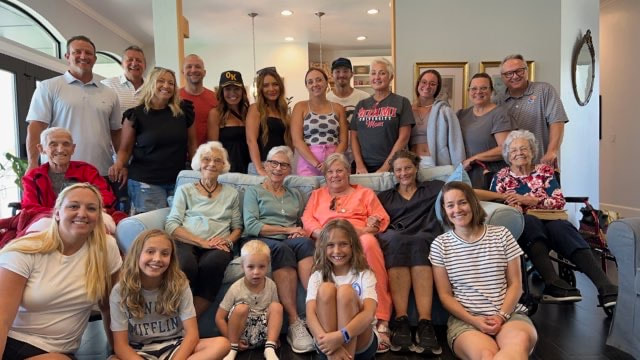 I’m currently sitting in the airport waiting on a delayed flight for a trip I could have never imagined taking when I was a child. I mean, it makes sense, but for most of us we don’t let our minds go certain places until we have to. For this trip, I had to. I was flying with my two girls and wife along with a dozen or so other family members coming from different directions to see my Uncle Roy who is dying of bone cancer. And, while he is 90, he’s a man I’ve known my whole life to be as full of life and intellect and spirit as anyone you could find. A scientist, an educator, a father, grandfather, and great grandfather. I hadn’t seen him in years and wasn’t really sure what to expect. He’s been suffering a long time. But, when I sat down next to him, I found it was only his body failing. The rest was intact. “I picked up your book again, Creating Matters. I read it when you first wrote it. I can’t help but believe there is a connection to God there.” He continued talking about Biblical creation and we made the connection to where and how I had found myself and my connection to a higher power through the process of creating art, how while I do not go to church, my family and I go to the mountains – our way of touching transcendence. I immediately had a feeling this was how he used to talk with my Dad. I sensed in my gut he may have been hoping for this conversation with me. But, I wasn’t sure what his stamina was at this point, so I just let it all sink in as things fell quiet between us – the splashes and laughs of my kids playing in the pool resurging to their rightful place in the moment. “I used to love to talk with your Dad.” He stated quietly as he broke back into the moment without looking at me. He continued matter-of-factly and affirmatively. “I know I’m not long for this life now. I loved your Dad. I know I’m going to get to talk to him again soon.” He gazed forward almost longingly. These words would be powerful regardless. But, Uncle Roy is a steadfast Christian. Something my Dad was not, and something I can only imagine they spent countless hours discussing and debating – a scientist and an attorney, a Christian and a victim of the Church’s guilt and judgment. My Dad died by suicide 17 years ago. I know this part of my family loved my Dad for who he was in life and death. But, I never asked what any of them thought religiously about his suicide. I honestly never considered it. I didn’t really care. So, it was surprising how much Uncle Roy’s words about talking with my Dad again hit me. They landed as more than words. They were a pronouncement, a proclamation. They were a beautiful and hopeful vision of two very different lives and spirits rejoining in an afterlife to continue their conversation – probably, in part, about whether or not there’s an afterlife. The weekend was a joy and a celebration with cousins I’d grown up with but rarely see, with their children, and with the child of one of their children – the great grandchild, the great nephew, four generations together. A two-year-old for all of us to love and dote on as we wittingly or unwittingly sought to hold on to life and light despite the cause for our gathering. It’s only been a matter of months since we also said farewell to another dearly loved uncle, Uncle Ty, of the same generation, who added an accountant’s perspective to the dialogues of the attorney and the scientist. I’d visited Uncle Ty just months before. And, it was the last time. This is 47 years old, I guess. This is the generational shift. This is the cost of a lifetime of joy and love and connection (and the invariable dose of dysfunction) with a big family. The fortune. The pain I must reframe and reposition in relation to the size of the gift. I’d already broken down in tears before it was time to go to the airport and had mostly regrouped with the love and hugs and kindness of my daughter. She gave me strength. She gave me grounding. She made me feel better as I deal with losing my past. She and her sister are my ultimate present and future. But, then there’s still that moment. It’s finally time to go to the airport. Which means you line up with other family members at the foot of the wheelchair to give a hug that everyone knows is the last time. The moment starts to consume me. Its potency is magnified by the mutual recognition. And as I leaned over to hug Uncle Roy, I wasn’t sure how long I could contain myself. I was just trying to hold on long enough to get my sunglasses back on and get out the door where I would feel free to lose it again. “I love you.” I whispered haltingly to my uncle. “BUTT PASTE!!!” A tiny but loud voice came shattering through the moment. The great grandchild and 2-year-old had been enjoying a new audience during the weekend. He’d been saying “butt paste” for two days and getting a laugh from all ages and directions. But, this one he brought with conviction, louder than he’d said it all weekend, an exultation for all to witness! A call to the altar of life. It was the youngest spirit in the room reminding us – “Hey! I’m here. You’re still here! Butt paste!” And, it continues. A life that is so much more than us and so much bigger than we can conceive. A spirit that connects us, came before us, and lives after us. An energy that can lift us and break us and lift us again. A life so wondrous that it begs for an afterlife, but still grounds and humbles us with butt paste. I hope Uncle Roy tells my Dad about butt paste. He’ll think it’s hilarious.   I spend a lot of time with individuals and teams working on two big concepts: trust and communication. I always tell them: if trust is the foundation of leadership then communication is the medium.
And yet, I have had several occasions recently where more senior leaders have heard about these topics and figure the discussions and trainings must be for junior leaders. They are so basic! I would caution here not to confuse basic with foundational. As every architect knows, you can’t build anything without investing in, improving, and innovating at the foundation. Every foundation must be designed based on the needs of the structure, the current standards, the environment, new technologies and materials. No single foundation suits all buildings – or all relationships. PWC recently published their Trust Survey results for 2023 and they suggest that leaders across industries are underinvesting in their trust foundation – and their people feel it. Here are a few highlights from their research:
It’s also worth noting that 91% of business executives say that their ability to build and maintain trust improves the bottom line. Every human being who has ever had a relationship with another human being knows that trust is far easier to break than to build, much less rebuild. And, it’s hard to build a relationship much less a scalable company without due attention to its foundation. Here are a few tips for checking your foundation: 1. Emphasize the Why: Make sure everyone understands why the company exists and help them find meaning in working there. Help them find their personal "why" in the work regardless of their age, role, or level in the company. Meaning helps us keep a bigger perspective on our work and our relationships and keeps the little things from being trust breakers. 2. Share Values Stories: Trust is built over time and the more you build the more grace you get when a trust-breaking event happens. Your company stories are your “grace bank” that help you build a track record of living your values so that when it appears you had a miss, people see and understand that as the outlier not the norm. 3. Communicate Constantly: Another one of my refrains is that “silence is never silence” in a company. In the absence of your voice, the voice of the company, your people will make up their own stories about you and it – and they are likely to be worse than reality. 4. Own Your Mistakes: Making mistakes does far less damage to trust than not owning those mistakes. You make mistakes. Companies make mistakes. The trust impact comes down to how you handle that reality rather than deny it. |
Categories
All
Archives
April 2024
|
 RSS Feed